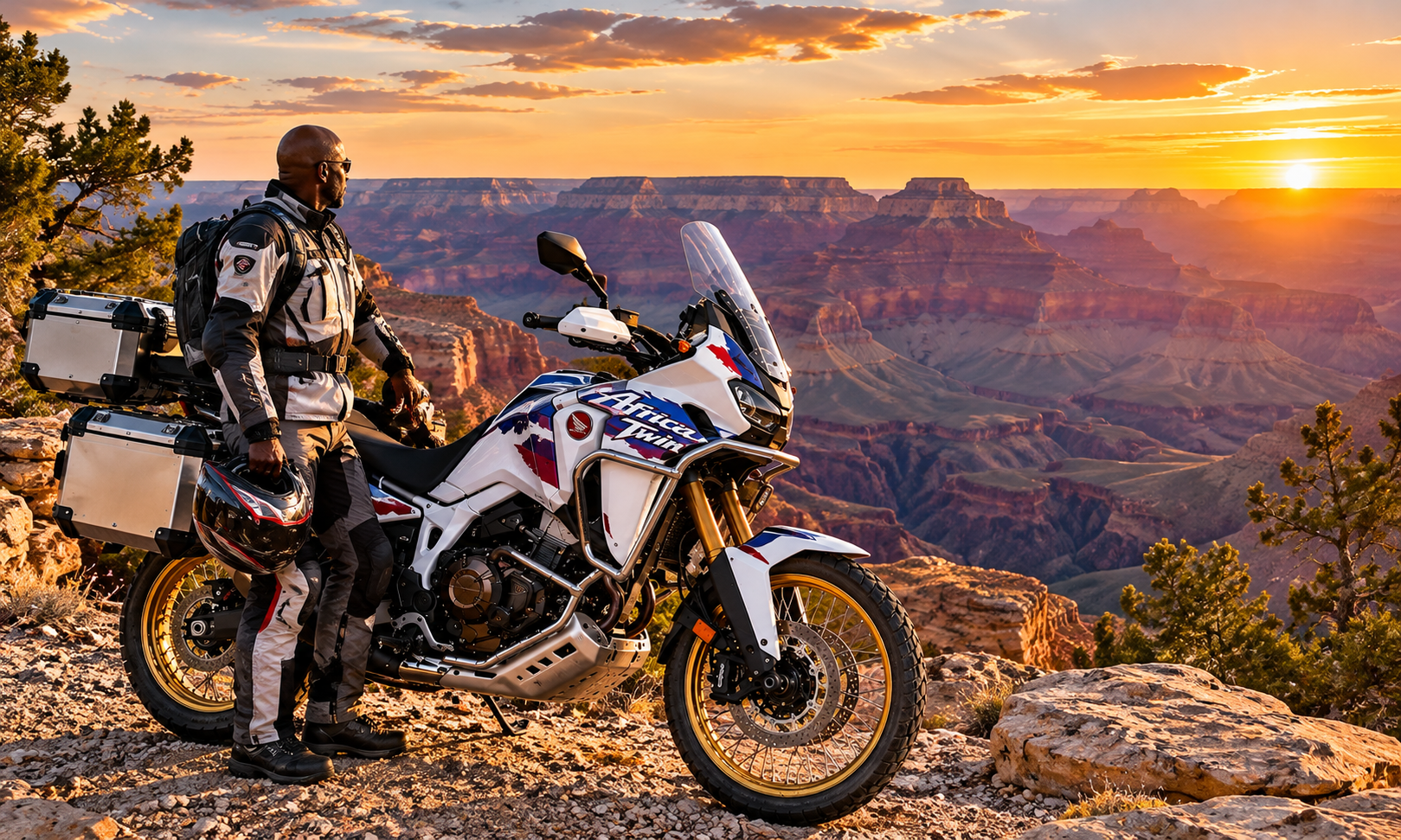
🏍️ Black Adventure Motorcycle Riders: Getting Started
For generations, Black motorcyclists have helped shape American motorcycle culture. From long-distance touring and motorcycle clubs to custom-built machines and cross-country adventures, Black riders have established a strong presence in the motorcycling community.
But there is another side of motorcycling that deserves more attention: adventure riding.
For riders accustomed to Harley-Davidson touring motorcycles, cruisers, and traditional highway riding, adventure motorcycling introduces an entirely different experience.
Imagine leaving the interstate behind, traveling through mountain passes, exploring gravel roads, visiting remote communities, and discovering places that most travelers never see.
Adventure riding isn’t necessarily about riding faster or taking greater risks. It’s about expanding the possibilities of where a motorcycle can take you.
And for Black riders interested in exploring something different, the opportunity is there.
🌍 Representation Matters in Adventure Motorcycling
Black riders have a rich history in motorcycling, yet that history isn’t always reflected in mainstream adventure motorcycle advertising, magazines, or promotional videos.
When adventure riding is portrayed, the images often feature the same types of riders traveling through deserts, mountains, and remote wilderness.
But the adventure motorcycle community is larger and more diverse than those images might suggest.
Black men and women ride adventure motorcycles, explore backcountry roads, camp across the country, and participate in long-distance motorcycle challenges.
Greater visibility matters because seeing riders with familiar backgrounds enjoying these experiences can encourage others to explore them.
The goal isn’t to create separation within motorcycling. It’s to make sure everyone feels welcome to participate.
Adventure has no color, and the open road belongs to everyone.
🏍️ Moving Beyond Traditional Motorcycle Culture
Many Black riders are introduced to motorcycling through cruisers, sport bikes, touring motorcycles, and motorcycle clubs.
Those communities offer camaraderie, tradition, shared experiences, and a strong sense of belonging.
Adventure riding doesn’t require abandoning any of that.
A rider can enjoy a Harley-Davidson Road Glide one weekend and explore a mountain gravel road on a Honda Africa Twin the next.
The difference is simply the type of journey.
Adventure riding opens opportunities to explore national forests, unpaved backroads, remote campgrounds, and destinations that may be inaccessible or uncomfortable on a traditional touring motorcycle.
It’s another way to enjoy the same passion for riding.
And you don’t have to become a hardcore off-road rider to participate.
⚙️ Choosing Your First Adventure Motorcycle
One of the first challenges for newcomers is deciding which motorcycle to purchase.
Adventure motorcycles come in a wide range of sizes, weights, and capabilities.
Popular choices include:
- Honda Africa Twin: A capable touring and adventure motorcycle with an available Dual Clutch Transmission.
- BMW GS Series: Known for its adventure-touring capabilities, technology, and long-distance comfort.
- Yamaha Ténéré 700: A popular option for riders interested in exploring more demanding unpaved terrain.
- Suzuki V-Strom: A versatile platform for highway touring and exploring easier unpaved roads.
- Kawasaki KLR650: A practical option for riders interested in simplicity and backroad exploration.
The biggest motorcycle isn’t necessarily the best choice.
Lighter motorcycles may be easier to handle on loose surfaces, while larger adventure-touring motorcycles can offer greater highway comfort and luggage capacity.
Before buying, consider where you intend to ride, your comfort managing the motorcycle’s weight, seat height, maintenance requirements, and budget.
My recommendation is to choose a motorcycle that matches your current skill level rather than one designed for adventures you may never attempt.
🎓 Training Before the Adventure
Riding a motorcycle on gravel, sand, mud, or uneven terrain requires skills that differ from ordinary street riding.
Body positioning, braking techniques, throttle control, and balance become especially important.
Even experienced highway riders can benefit from formal adventure motorcycle training.
The Motorcycle Safety Foundation’s AdventureBike RiderCourse is one resource worth exploring.
A good training course can help riders become more comfortable with low-traction surfaces while building confidence in a controlled environment.
Start with easier terrain and gradually increase the difficulty as your skills improve.
There is no requirement to tackle challenging trails on your first adventure.
🧳 Gear, Preparation, and Safety
Adventure riding introduces additional considerations when choosing protective equipment.
A properly fitted helmet, protective riding jacket, motorcycle pants, gloves, and supportive boots are essential.
For riders planning to explore unpaved roads, adventure or off-road-oriented boots offer additional protection.
Other useful equipment includes luggage, navigation tools, a tire repair kit, basic tools, water, and emergency communication equipment.
If you’re traveling into remote areas, plan fuel stops carefully and let someone know your intended route.
Consider riding with an experienced partner during your early adventures.
Remember that the objective is to enjoy the journey and return home safely.
🏕️ Finding Adventure Riding Communities
One of the best ways to enter adventure motorcycling is to connect with riders who already participate.
Look for motorcycle training events, adventure riding meetups, organized dual-sport rides, and motorcycle camping gatherings.
Black riders already active in adventure motorcycling can also help introduce newcomers to this side of the sport through mentorship, group rides, and shared experiences.
Social media and motorcycle forums can be useful places to find riders with similar interests.
An excellent resource for exploring adventure routes is Backcountry Discovery Routes.
The organization provides information about established backcountry motorcycle routes, maps, GPS tracks, and planning resources.
However, some routes require significant off-road experience, so beginners should carefully evaluate conditions and difficulty before attempting them.
Building a supportive riding community makes learning easier, creates opportunities for friendship, and helps new riders gain confidence.
🛣️ You Don’t Have to Ride Off-Road to Start
One of the misconceptions about adventure motorcycles is that they must constantly be ridden through difficult terrain.
That simply isn’t true.
Adventure touring can begin with scenic highways, mountain roads, national parks, and occasional well-maintained gravel roads.
For someone transitioning from a touring motorcycle, this approach provides a comfortable introduction.
Spend time learning your motorcycle, experiment with different road conditions when safe, and develop your skills gradually.
Over time, you may discover that the roads you once passed without a second thought lead to some of your most memorable riding experiences.
✊ Opening the Door for the Next Generation
Encouraging greater participation among Black adventure motorcyclists is about more than purchasing a different type of motorcycle.
It’s about creating new experiences and showing younger riders that their opportunities are not limited to traditional motorcycle culture.
Share your travels. Photograph your adventures. Tell your stories.
Invite someone who has never ridden an adventure motorcycle to attend a training event or join an appropriate beginner-friendly ride.
The more riders share their experiences, the easier it becomes for others to imagine themselves participating.
There is room for everyone in adventure motorcycling, regardless of background, age, gender, or the type of motorcycle they currently own.
🏁 Final Thoughts: The Adventure Is Yours
Adventure motorcycling represents another chapter in the freedom that motorcycles have always provided.
For Black riders considering their first adventure motorcycle, the message is simple: Don’t allow unfamiliar territory or a lack of representation to discourage you from exploring.
You don’t need expensive equipment, years of off-road experience, or an expedition across the world to begin.
Start with the motorcycle that fits your needs, get proper training, find supportive riders, and explore at your own pace.
The next great motorcycle experience might not be waiting at a rally, a dealership, or the end of an interstate.
It might be waiting where the pavement ends.
Honda Africa Twin Review
For Black adventure motorcycle riders considering the transition from traditional touring motorcycles to adventure bikes, the Honda Africa Twin is worth exploring. In my 2026 Honda Africa Twin DCT Review, I share my experience after more than 4,000 miles, including the DCT transmission, electronic suspension, comfort, touring capabilities, and accessories.
BackCountry Discovery Routes
One of the best ways to explore adventure riding opportunities is through Backcountry Discovery Routes (BDR). This organization provides motorcycle route information, maps, GPS tracks, and planning resources for riders interested in discovering scenic backcountry destinations. Beginners should research route difficulty and road conditions before heading out.
🎓 Adventure Motorcycle Training – MSF AdventureBike RiderCourse
Before heading onto gravel roads or challenging terrain, I strongly recommend professional training. The Motorcycle Safety Foundation AdventureBike RiderCourse introduces adventure motorcycle riders to techniques for handling larger motorcycles on unpaved surfaces. The course focuses on building confidence, balance, control, and practical riding skills. Even experienced highway riders can benefit from learning the differences between street riding and off-pavement riding.
The road doesn’t define the rider. The rider defines the adventure.
Ride Safe. Ride Far. Let’s Ride!
The Common Road Traveler
Leave a Reply